Emergency Electrician in Nassau County, NY
If you have partial power, a burning smell at the panel, sparking, or storm-damaged service wires in Nassau County, treat it as urgent. We respond within 1 hour. If there is smoke or fire, leave and call 911. If the whole street is dark, call PSEG Long Island. For everything on your side of the meter, call us.
What to do in the first few minutes
- 1Smoke, flames or a hot panel: get everyone out and call 911 before anything else.
- 2A burning smell only: stay away from the panel, do not open it, and do not keep resetting a breaker that keeps tripping. If the panel is dry and you can reach it safely, switching off the affected breaker is reasonable. Then call us.
- 3Water near outlets or the panel: stay out of it, and do not turn anything back on that has been wet.
- 4Wires down outside: treat every wire as live, stay back, and call PSEG Long Island and 911.
- 5Half the house dead, or lights that dim and brighten: note which rooms are affected and whether the neighbors have power, then call. That detail tells us which side of the meter to check first.
Partial power or half the house dead
This one can come from either side. A lost leg or a loose connection at the pole looks the same inside the house as a bad connection in your panel. We check voltage at the meter and the panel under load, and if the fault is on PSEG Long Island’s side we tell you so you can report it.
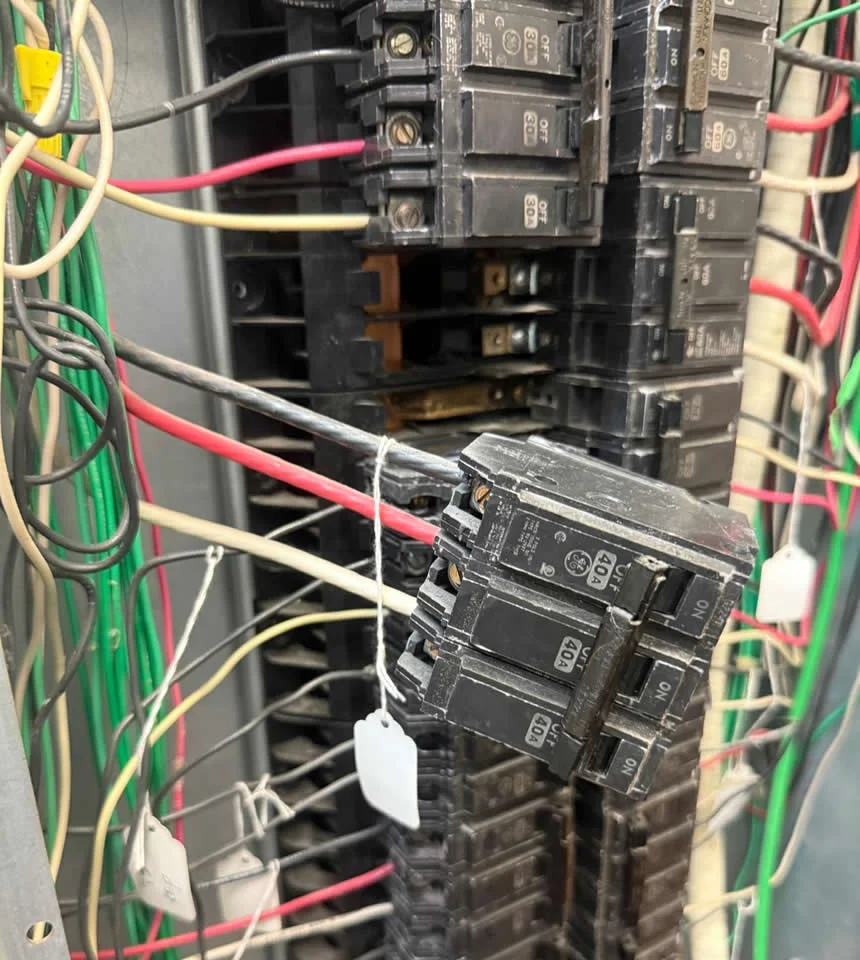
A breaker that keeps tripping, or a burning smell at the panel
A normal voltage reading does not clear a breaker, because a burned contact heats up only when current flows. We check under load with a clamp meter and look at the breaker’s connection to the bus. Our panel repair and upgrade page explains when a repair is enough.
Storm-damaged service wires, weatherhead or meter pan
When a branch or a storm pulls the weatherhead off the house or damages the entrance cable, that damage is on your side of the connection. An electrician has to repair it before PSEG Long Island can restore service, and PSEG may make a temporary repair first. If the service equipment is replaced, the work is permitted and inspected, and our service upgrade page covers what that involves.
Water or flood damage to electrical equipment
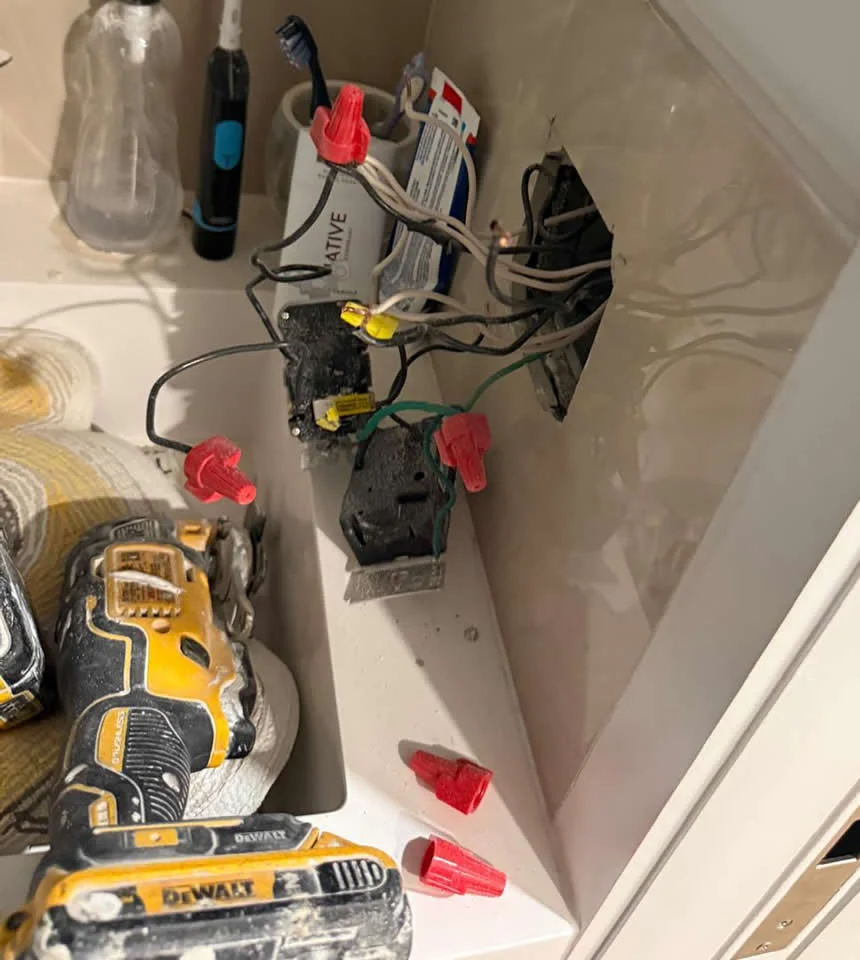
On the South Shore, flooding takes out panels, meters and outlets. After Superstorm Sandy, LIPA required an electrical certificate for every flooded home before it would reconnect, and you should expect the same kind of check after serious flooding. In a mapped flood zone, replacement equipment has to sit at least two feet above base flood elevation, so how we rebuild matters.
Sparking, hot or buzzing outlets
An outlet that is warm, buzzing or sparking has a loose or failing connection. Stop using it and switch off that circuit. We trace the circuit instead of swapping the outlet, because the fault can sit in a junction box elsewhere on it. More on our wiring repair page.
Questions about electrical emergencies
Stay clear, treat every wire as live, and call PSEG Long Island and 911. Once it is safe, call us for the weatherhead, entrance cable and meter pan, which are on your side. We repair them, get the work inspected, and PSEG Long Island reconnects once it has the inspection certificate. You pay for the weatherhead and meter pan; PSEG owns the drop and the meter.
Once, if the panel is dry and nothing smells burnt. If it trips again, or if there was a burning smell, stop. A breaker that trips repeatedly is protecting you from something, and resetting it over and over can overheat a damaged contact.
PSEG Long Island if the whole street is out or wires are down. An electrician for anything at or after your weatherhead. If you have partial power and cannot tell, an electrician can check the meter and panel and tell you which side the fault is on.
Smoke, a burning smell, sparking, a hot or buzzing panel or outlet, wires down, water in electrical equipment, and partial power loss. A single dead outlet or a flickering bulb is not an emergency, but a breaker that keeps tripping should not wait long.