Electrical Wiring Repair & Rewiring in Nassau County, NY
Most wiring problems in Nassau homes come down to a loose connection, an overloaded circuit, or wiring that has reached the end of its life. The symptom rarely points to the cause: a dead outlet in a bedroom can be a bad junction box in the attic. We trace the circuit to the real fault before we quote, tell you whether it is a repair or a rewire, and where your town or village requires a permit, we can obtain it.
Older Nassau homes: what we find
A lot of Nassau was built in the post-war years, and the wiring in those houses has had decades of additions, repairs and shortcuts.
- 1Cloth-covered wiring. Rubber-and-cloth insulation dries out over the years. Moving a fixture or opening a box can make it crumble and expose bare copper, so we test its condition before we say whether it can stay.
- 2Knob-and-tube wiring. This early system has no ground wire and is often spliced, buried in insulation or overloaded. What can stay depends on its condition, the work being done and what your inspector accepts.
- 3Aluminum branch wiring. It needs connectors and devices rated for it at every connection, because poor connections are where it fails. We check each one before deciding on a repair or a rewire.
- 4Two-prong outlets and missing grounds. An ungrounded outlet cannot be safely made three-prong by swapping the receptacle alone. We tell you the correct options for that circuit.
- 5Taped and hidden splices. Splices belong inside an accessible box. A single bad splice stuffed in an attic can take out outlets in several rooms.
GFCI and arc-fault protection under the 2023 code
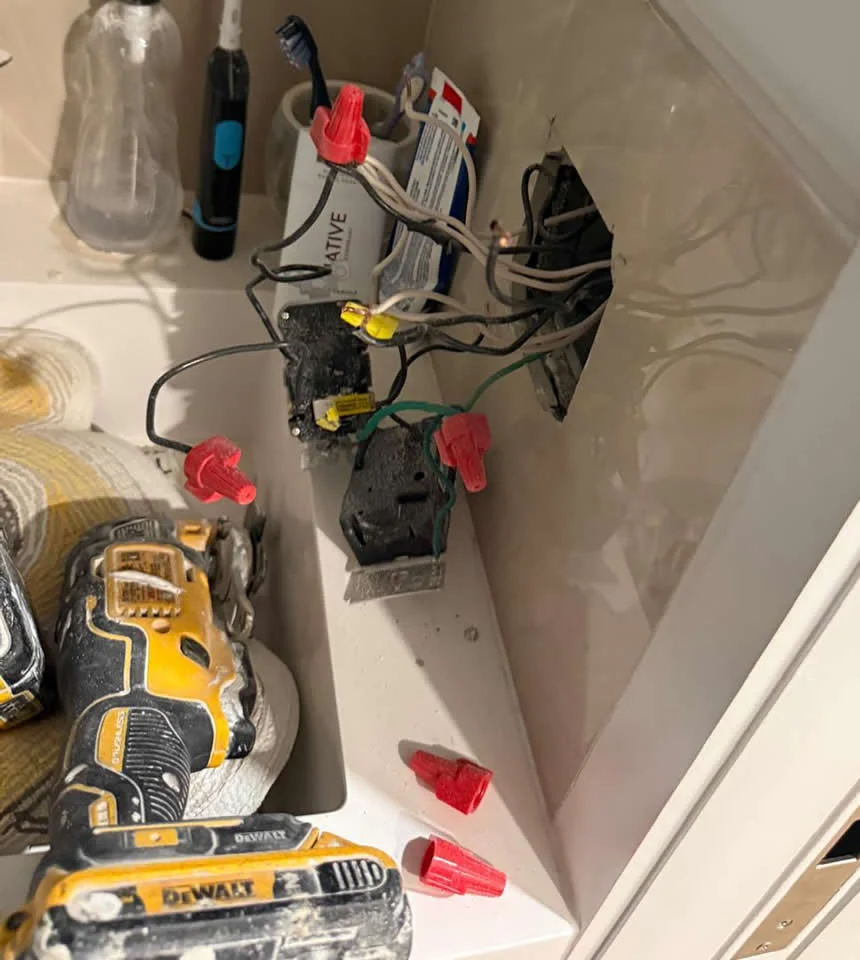
New York’s 2025 Uniform Code adopts the 2023 National Electrical Code, which widened ground-fault and arc-fault protection on new or changed circuits. Circuits you have not touched are generally not forced to catch up, but replacing receptacles in certain rooms, or adding or extending circuits, can trigger protection. That is why a simple outlet swap sometimes costs more than the part. We tell you what applies before we start.
240-volt circuits for dryers, ranges and ovens
New circuits for dryers and ranges use four wires: two hot, a neutral and a ground. An older three-wire outlet may stay for an existing appliance, but a new appliance with a different plug can mean a new receptacle and sometimes a new circuit. A 120-volt circuit cannot simply be relabeled as 240: the cable has to suit the load, the breaker becomes two-pole, and the panel needs a free pair of spaces. If your panel is full, we tell you before we start.
Switches, outlets, alarms and everyday devices
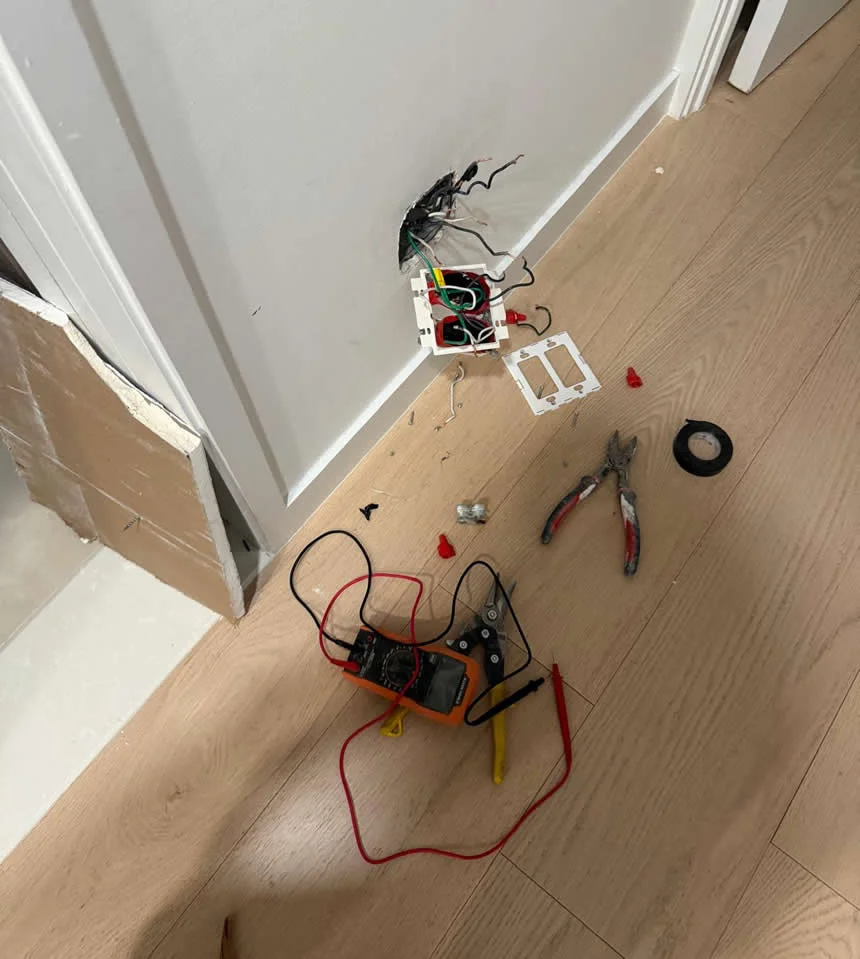
These small jobs make up most service calls: worn or discolored switches and receptacles, GFCI protection in kitchens, bathrooms, garages and outdoors, USB and quad outlets, and outlets wired backward. We also install hardwired, interconnected smoke and carbon monoxide alarms, which belong on every level and outside and inside sleeping areas. Smoke alarms are generally replaced about every 10 years, and CO alarms have an end-of-life date printed on the unit. Smart and three-way switches are on our lighting page, and Ethernet, speaker and camera cabling is on our low-voltage page.
A “simple” device swap can turn out to be a wiring problem behind the wall. If the failing outlet is the last one on a circuit with a bad connection, replacing it only hides the cause. We check the circuit.
Questions about service upgrades
Yes, often. New circuits are new wiring, so they are permitted and inspected where required. A 240-volt conversion is not a relabel: the cable size, breaker, receptacle and free space in the panel all have to match the new load.
Anything that is a fire or shock risk comes first: open splices, hot or burned connections, missing ground-fault protection near water, and damaged or overloaded panels. Then code items, then cosmetic ones. We can go through the report with you.
New wiring, new circuits and panel or service work are permitted and inspected in Nassau. For like-for-like device swaps the answer varies by town and village. We can obtain permits where they are required.
Usually a loose connection, either at the fixture, at a switch or outlet on that circuit, or at the panel or meter. Flickering that comes with a burning smell or a warm panel is an emergency. If it happens only when a large appliance starts, the service or a shared neutral may be the cause.
The common causes are a tripped GFCI somewhere on the same circuit, a loose connection, or a tripped breaker. Check for a GFCI outlet in the kitchen, bathroom, garage or outside, press Reset, and check the panel. If that does not work, call us, because swapping the outlet usually does not fix the cause.
Talk to us about your wiring
Tell us what you are seeing, which rooms are affected and how old the house is, and we will tell you whether it is a repair or something bigger. Our Nassau County electrician page lists every area we cover.