
Lighting Installation in Nassau County, NY
We install recessed lighting (hi-hats), ceiling fans, outdoor and landscape lighting, pool-area lighting, dimmers and under-cabinet lights in Nassau County homes and businesses. In an older house, most of the job is what sits above the ceiling: the wiring, the insulation and the box. We check that first, tell you what is possible, and where your town or village requires a permit, we can obtain it.
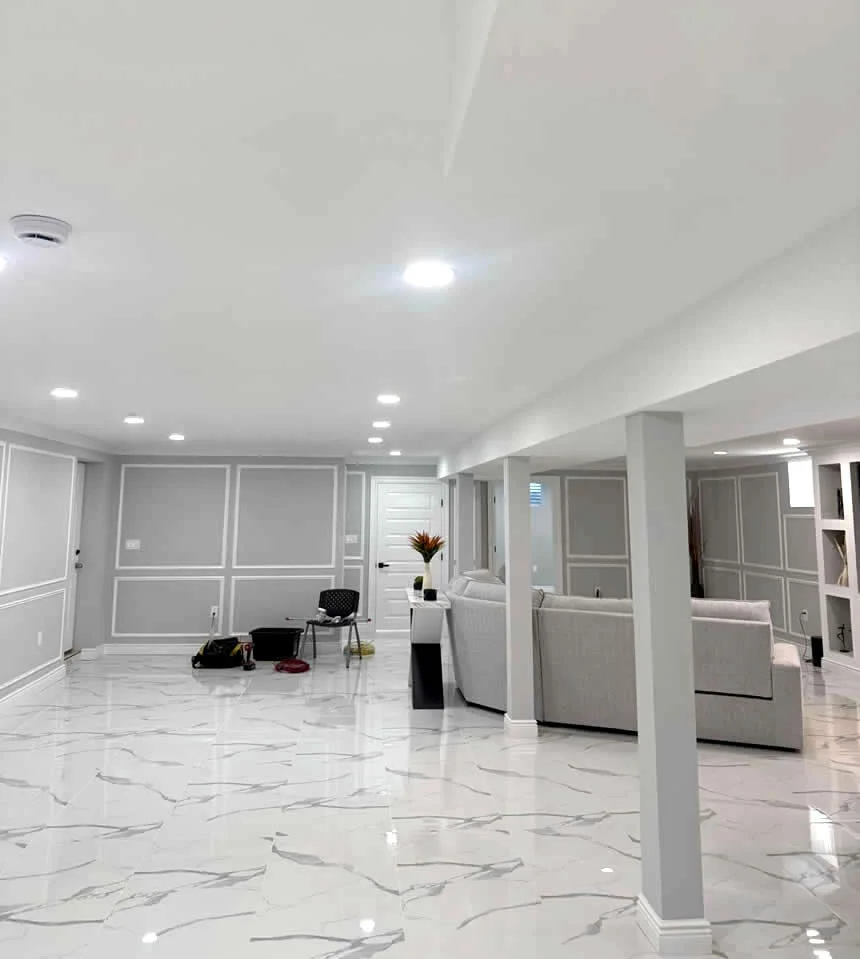
Recessed (hi-hat) lighting in Nassau houses
What decides how a hi-hat job goes:
- 1Access above the ceiling. An attic above makes it simple. A finished second floor above means remodel-style housings that fit through the hole, and a plan for the wiring path.
- 2Insulation contact. Where insulation touches the housing, it has to be rated for that. We use the right type for the ceiling.
- 3Joists and layout. Joist direction and ducts set where lights can go, and spacing sets how even the light is.
- 4What is up there already. Older ceilings often have cloth-covered wiring or taped splices. We deal with those before adding load to them. See our wiring repair page.
- 5Circuit capacity. Adding a dozen lights to an overloaded circuit is a problem waiting to happen. We check the circuit and, if needed, the panel.
Dimmers, switches and smart controls
Most flicker on an LED dimmer comes from a dimmer and a lamp that do not match. We pair them. Many smart switches need a neutral wire in the switch box, and older houses sometimes do not have one there. We check before you buy, so you do not end up with a switch that cannot be installed. Under-cabinet strips are a good small project, wired to a switch, and in a kitchen we check that the wiring serving them is up to date. Planning smart controls, speakers or cameras alongside the lighting? Run that cabling before the walls close; our low-voltage page covers it.
Replacing light fixtures and chandeliers
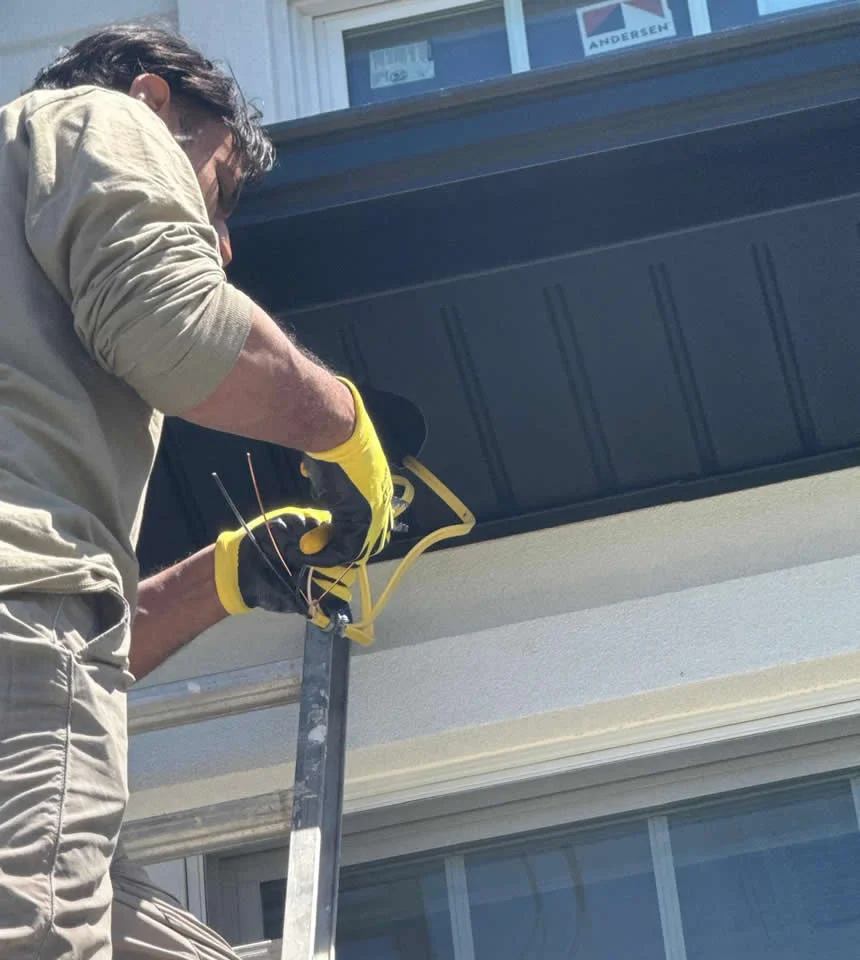
Swapping a fixture sounds simple, and it often is, but the job is really about what the fixture hangs from and what wiring it connects to. Indoors we check that the box is secured to the framing and rated for the weight, which matters most for a heavy chandelier that needs a brace, a safe lift and a chain set to the right height. Outdoors, porch lights, post lights and wall packs have to be rated for wet or damp locations and sealed, because cracked old fixtures are a common way water gets into a wall. In an older house we often open a fixture and find brittle cloth-covered wire or taped splices, and we fix that first, so the new fixture does not sit on a hidden problem.
Three-way and four-way switch systems
A three-way switch system lets you control one light from two places, such as the top and bottom of a stairway or both ends of a hall. A four-way adds a third location. They are wired differently from an ordinary switch, which is why a replacement that looks identical often does not work. We trace which wire does what and rewire it correctly. If a location has no traveler wire between the switches, a wireless smart three-way switch can control the light from both spots without opening the walls.
Questions about lighting
A three-way switch is wired differently from a standard switch, and the wires are not always where you expect them. A switch that looks identical can behave very differently. We trace the wires and connect them correctly, or use a wireless three-way smart switch where there is no traveler wire.
Many do, and older houses often lack one at the switch box. We check the box before you buy, and tell you if there is a no-neutral option that fits.
It depends. New circuits, new wiring, and outdoor or pool wiring are permitted and inspected where required. A like-for-like fixture swap usually is not. We can obtain permits.
Usually the dimmer and the lamps do not match, or the load is below the dimmer’s minimum. Matching them fixes most cases, and a loose connection is the next suspect.
Only if the box is rated for a fan and secured to the framing. We check, and replace the box or add support if it is not.
IC-rated housings can be in direct contact with insulation. If insulation touches the fixture, you need them. We choose the right type for your ceiling.
Yes, with remodel-style housings or low-profile LED lights that fit through a small hole. We check what is above the ceiling first and plan the wiring path so we cut only what we need to.
Talk to us about your lighting
Tell us the rooms, the ceiling type and what you want to see, and we will tell you what is possible. Our Nassau County electrician page lists every area we cover.