
Electric Service Upgrade in Nassau County, NY
A service upgrade changes what comes in from the utility: the weatherhead, the entrance cable, the meter socket and the main disconnect, most often going from 100 amps to 200. In Nassau it is a sequence between your town or village and PSEG Long Island: permit, PSEG disconnect, the work, a private inspection, then PSEG reconnection. We explain the order before we start, and where a permit is required, we can obtain it.
The PSEG Long Island sequence, step by step
- 1Load check. What the house runs now and what you plan to add: EV charger, heat pump, electric range.
- 2Permit, where your town or village requires one. We can obtain it.
- 3Load letter, for any service of 400 amps or more and for every commercial service.
- 4PSEG Long Island disconnect. For a single-family, single-phase, overhead service up to 200 amps on a socket meter, PSEG’s CONNECTS procedure applies. Underground services, anything over 200 amps, three-phase and multi-meter buildings follow the full process.
- 5The work: weatherhead, cable, meter socket, main disconnect and panel as needed.
- 6Inspection. A private agency approved by your town inspects, and the certificate goes to PSEG Long Island.
- 7PSEG reconnects and sets the meter once it has the certificate.
Freeport and Rockville Centre run their own municipal electric utilities, so their process differs from PSEG’s. We confirm with the village first.
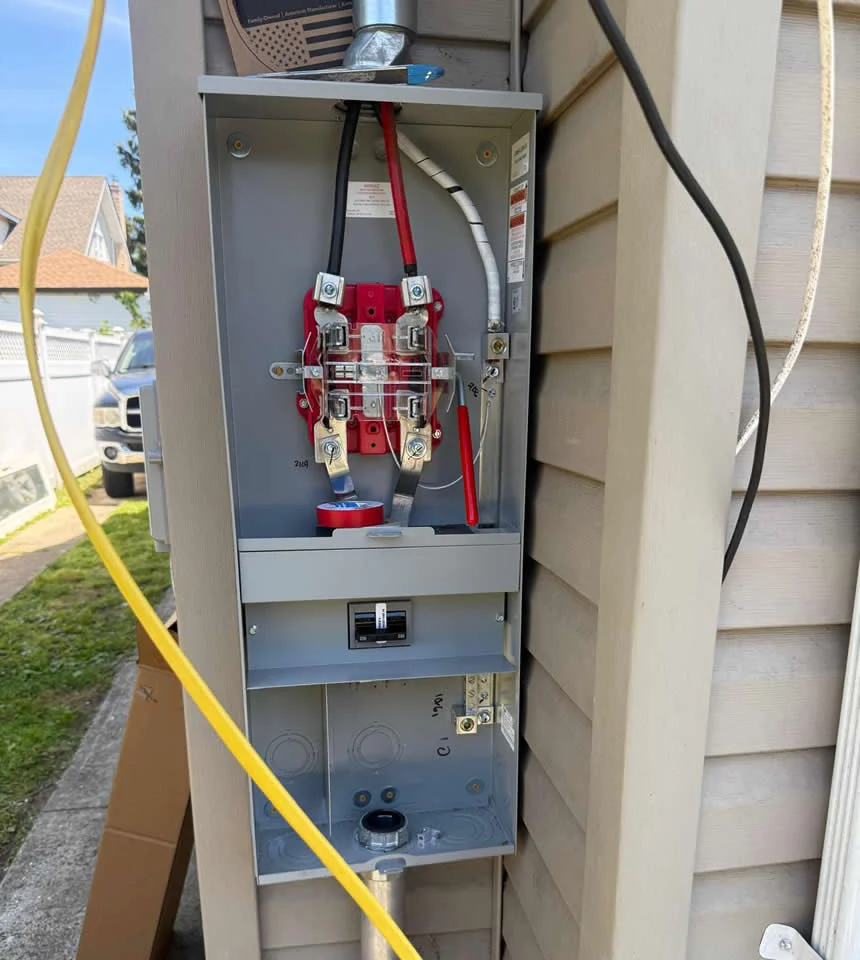
What changes inside the house when the main moves outside
When the main disconnect goes outdoors, the old panel inside becomes a subpanel. The neutral-to-ground bond and the grounding electrode conductors move to the outdoor disconnect, the feeder to the indoor panel becomes a four-wire cable with a separate ground, and surge protection comes with the new service equipment under the 2023 code. If you plan a generator, tell us now: PSEG Long Island asks to be consulted before generating equipment is connected, and our generator installation page covers a full standby unit. The upside is room for an EV charger and future loads, covered on our EV charger page.
Do you really need 200 amps?
Not always. A house with gas heat, gas cooking and a gas dryer can run well on 100 amps. An EV charger, a heat pump, an electric range or a finished basement can change that. We work out the real load before we recommend anything, and we say so when 100 amps is still enough.
320 amp, 400 amp and two-family services
A 320-amp service is the next step up for a large single-family house, an accessory dwelling unit or several EV chargers. Two-family houses and small buildings often need 400 amps. A two-family house has two meters, and each tenant needs a clearly labeled panel and shutoff, which means two services or one larger service split at a meter bank. All of these are over 200 amps or multi-meter, so they follow PSEG Long Island’s full process, not CONNECTS, and 400 amps or more needs a load letter. We prepare it before the work is scheduled so it does not hold up your reconnection. For commercial buildings, see our commercial electrician page.
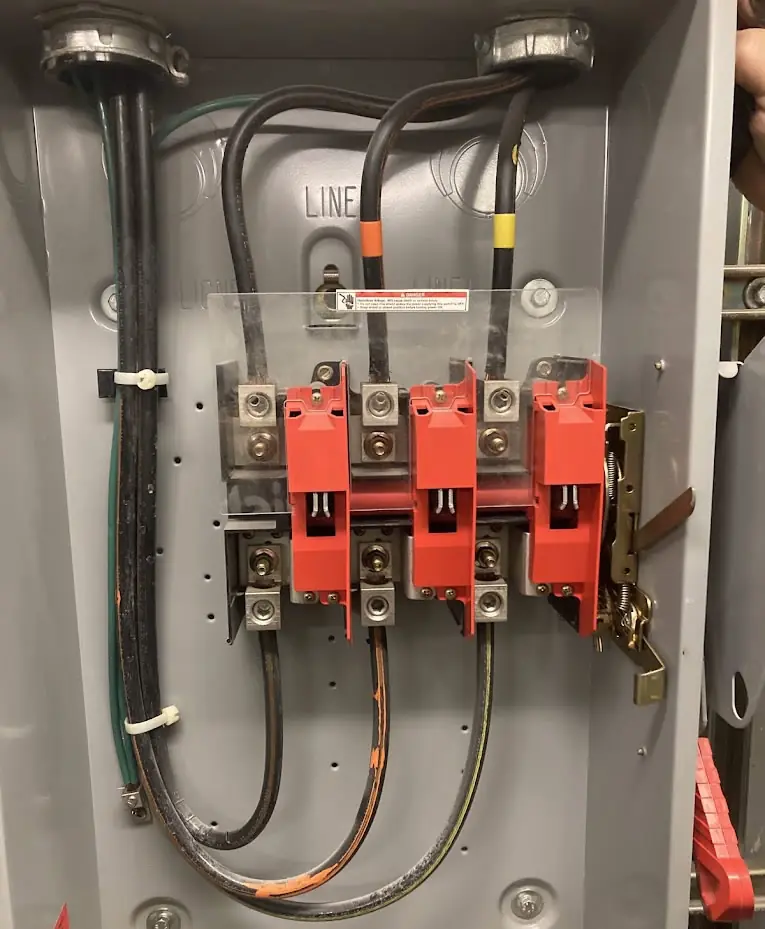
Meter, riser and mast replacement, overhead or underground
After a storm or years of weather, the riser (the conduit up from the meter), the mast and weatherhead, the meter pan and the entrance cable wear out. All of them are on your side of the connection. We replace them with PSEG-approved equipment and make the attachment solid, so PSEG Long Island’s drop is connected to something that will hold. An underground service comes up through buried conduit and is outside CONNECTS. Switching from overhead to underground means trenching, new conduit and utility coordination, and we explain the steps before we price it.
Questions about service upgrades
In Nassau, almost always. A private inspection agency approved by your town does the inspection, and PSEG Long Island needs the certificate before it reconnects. In the Town of Hempstead, new wiring cannot be used until the certificate of compliance is issued. We can obtain the permit.
Both villages run their own electric utilities, so the PSEG Long Island steps do not apply. In Freeport, a master electrician licensed by the village files the permit with the Building Department, and the work has to be inspected and certified before it is concealed. Rockville Centre has its own process, and we confirm it before quoting.
The outage is the time between PSEG Long Island’s disconnect and its reconnection, which depends on inspection and scheduling. We tell you the expected window before we start.
Often, yes. If only the meter socket, entrance cable or conduit are replaced, the NEC does not require an outdoor disconnect, and PSEG Long Island’s CONNECTS covers replacing individual service entrance components on an eligible single-family overhead service up to 200 amps. Your inspection agency has the final word.
Talk to us about your service
Tell us what the house runs now, what you plan to add and where the meter is, and we will tell you whether it is a 200-amp job or a smaller fix. Our Nassau County electrician page lists every area we cover.