EV Charger Installation in Nassau County, NY
We install Level 2 EV chargers and NEMA 14-50 outlets in Nassau County homes and businesses. The first question is not which charger to buy. It is what your panel can carry. We check the load, run a dedicated 240-volt circuit, get the permit where your town or village requires one, and the work is inspected before you plug in. Rebates may be available, and we point you to PSEG Long Island’s current program.
What your panel and service can carry
Charging an EV is a continuous load, so the circuit is sized above the charger’s amperage. A charger can only draw about 80 percent of its circuit’s rating: a 32-amp charger goes on a 40-amp circuit, a 40-amp charger on a 50-amp circuit, and a 48-amp charger on a 60-amp circuit. The car sets its own limit too, so a bigger circuit than the car can use adds cost and no speed. Before we quote, we work out what your house already draws and whether there is room.
Three outcomes are common:
- 1The panel has room. We add the circuit and you are done.
- 2The panel is full. We may need to replace it. See our panel repair and upgrade page.
- 3The service is too small for the whole house plus a charger. A 100-amp service with gas heat and cooking often still has room, but not always. When it does not, a service upgrade is the answer, or in some cases a load management device that lets the charger share the panel, where your inspection agency accepts it.
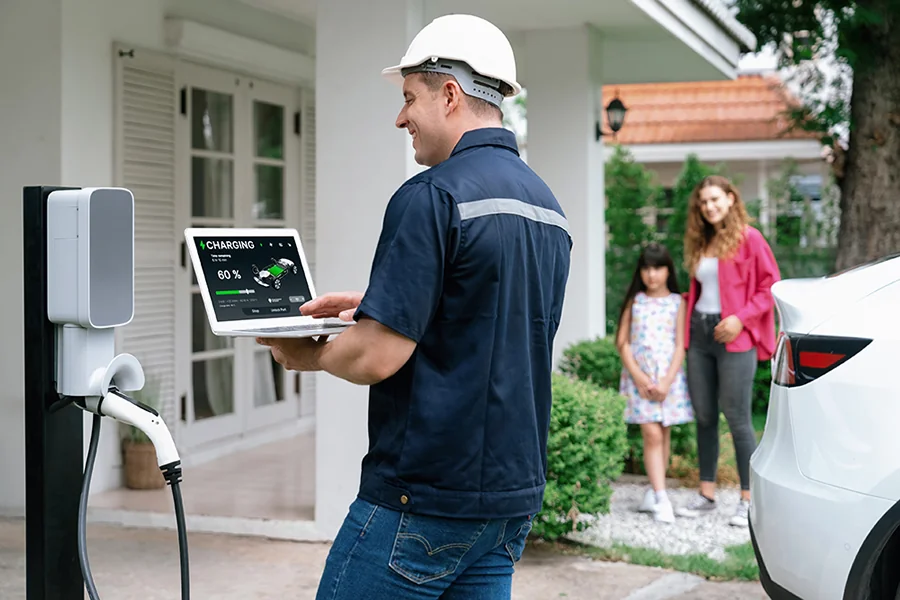
Tesla Wall Connector, ChargePoint and other brands
We install wall chargers from Tesla, ChargePoint, Grizzl-E and others. The wiring is the same kind of job. The brand decides the amperage setting, whether the unit plugs in or is hardwired, how the Wi-Fi setup works, and whether it appears on PSEG Long Island’s rebate list, which is why we ask which charger you have before we quote.
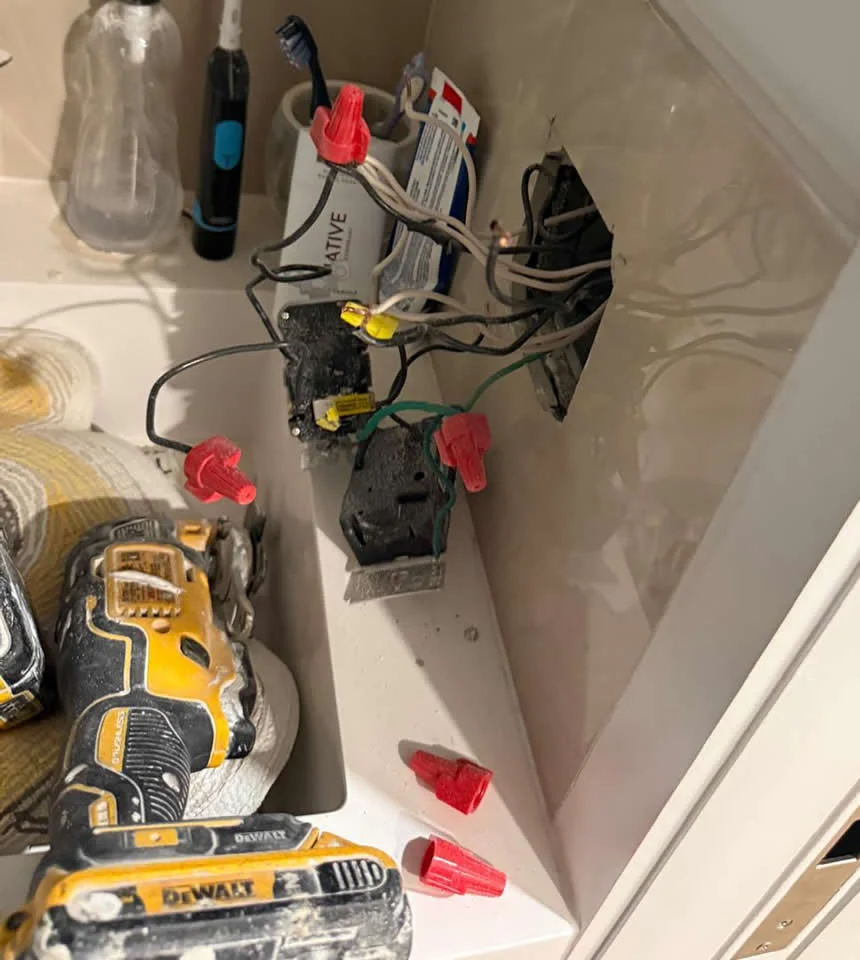
A charger that keeps tripping its breaker, charges slower than it should or will not start usually comes down to a loose connection, an undersized breaker, a ground-fault trip, a setting, or a fault in the charger itself. We test the circuit before we blame the charger. If a plug or outlet feels warm or looks discolored, stop charging and call us.
EV charging for businesses and multi-unit buildings
Commercial and multi-unit charging adds load management, pedestal or wall mounting, networked chargers and coordination with PSEG Long Island, which runs business programs that may help with the cost. The details are on our commercial electrician page. In a condo or co-op you will usually need building or board approval first, and we can give the board the load information it asks for.
Permits and inspection for an EV circuit in Nassau
A new 240-volt circuit is new wiring, and new wiring in Nassau is permitted and inspected. A private inspection agency approved by your town does the inspection. In the Town of Hempstead, new wiring cannot be used until the certificate of compliance is issued (Hempstead code, Chapter 84). Oyster Bay asks for the application before installation, North Hempstead inspects rough wiring before walls close, and many villages add their own step. Where a permit is required, we can obtain it.
Questions about EV charger installation
Usually a loose or overloaded connection, a weak breaker, or a ground-fault trip. Stop using it if the plug or outlet is warm or discolored, because heat at the outlet is the warning sign. We test the circuit and connections first, then the charger.
A 40-amp circuit supports a 32-amp charger, a 50-amp circuit supports 40 amps, and a 60-amp circuit supports 48 amps. We also check what your car can accept, because a bigger circuit than the car can use does not charge faster.
PSEG Long Island offers a residential charger rebate for qualifying Level 2 chargers, and other incentives may apply to some customers or to businesses. Amounts and rules change, so check PSEG Long Island’s current pages first. The federal home-charger tax credit ended on June 30, 2026.
A new 240-volt circuit is new wiring, so in Nassau it is permitted and inspected through your town or village. A private agency approved by the town does the inspection. We can obtain the permit.
It depends on what the house already draws and how much room the panel has. We run the load numbers before we quote. A 100-amp service with gas heat and cooking can have room, and a full panel may need replacing or a service upgrade.
For most homes, a 14-50 outlet with a plug-in charger is simpler and makes it easy to change chargers later. A hardwired charger can run at higher amperage if your car and panel can use it.
Talk to us about your charger
Tell us the car, where you park, where the panel is, and what the house runs now, and we will tell you what it takes. Our Nassau County electrician page lists every area we cover.