
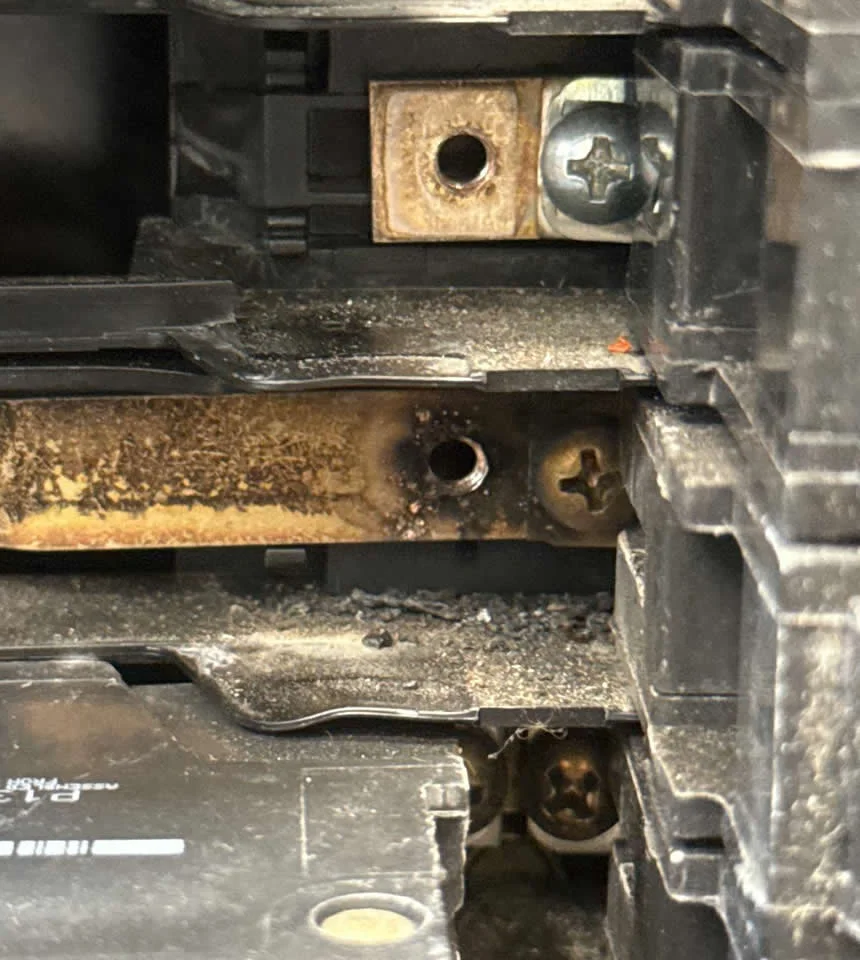
If you smell burning near your breaker panel, do not wait to see whether it passes. Keep your hands off the panel, move people away from it, and call 911 if you see smoke, scorching or flames. If there is no visible fire and the area is dry, switch off the main breaker only if you can reach it safely, then call an electrician. A burning odor means something is overheating, and heat inside a panel can start a fire.
First steps, in order
- Check for smoke or flames. If you see either, leave the house and call 911. Do not try to put out an electrical fire with water.
- Do not touch a hot, discolored or sparking panel. Stay back.
- Shut off the main breaker only when the panel is cool, dry and you can reach it without standing in water or touching the cover.
- Do not keep resetting breakers. A breaker that trips again is telling you something.
- Call an electrician and tell them what you smelled and where. If the main breaker is off, leave it off.
What the smell is usually telling you
Different odors point to different problems:
- Hot plastic or fishy smell: insulation or a breaker casing overheating
- Sharp, metallic odor: arcing, where current jumps a gap
- Scorched dust: a loose connection heating up
- Smell strongest at one outlet or switch: the fault may be in that circuit, not the pa
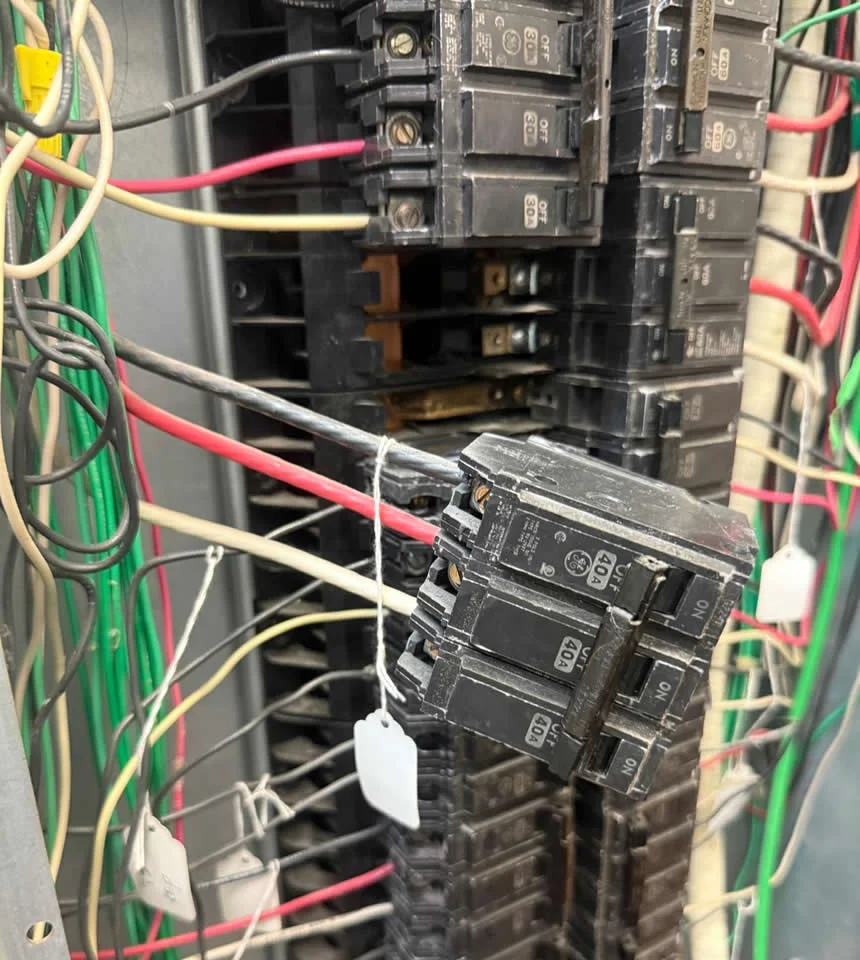
What happens when we arrive
We check the panel for heat marks, test the circuits, and trace where the smell came from. We will tell you whether the issue is a single breaker, a connection, a damaged circuit or the panel itself. If the panel needs replacing, local rules decide on permit and inspection, and PSEG Long Island may need to disconnect and reconnect power. We explain that sequence before we begin. See who fixes what between the utility and your electrician.
Next step
If your panel smells burnt, call us. Our emergency electrician page explains how we respond, and our wiring repair page covers the circuits behind it. If the panel is beyond repair, see panel, subpanel or service upgrade and how a service upgrade works. Breakers that trip on wet circuits are covered in why a GFCI keeps tripping.